Showing posts with label Tasks 1 to 6. Show all posts

Sunday, 27 March 2011

Task 6- Theory into practice

Look at the CTS blog that Garry Barker has been writing to complement the lecture programme this year. Write a short response to one of the posts on the blog. Use the ideas that Garry is discussing to mount a short critical evaluation of one piece of Graphic design that you have produced on Level 5.


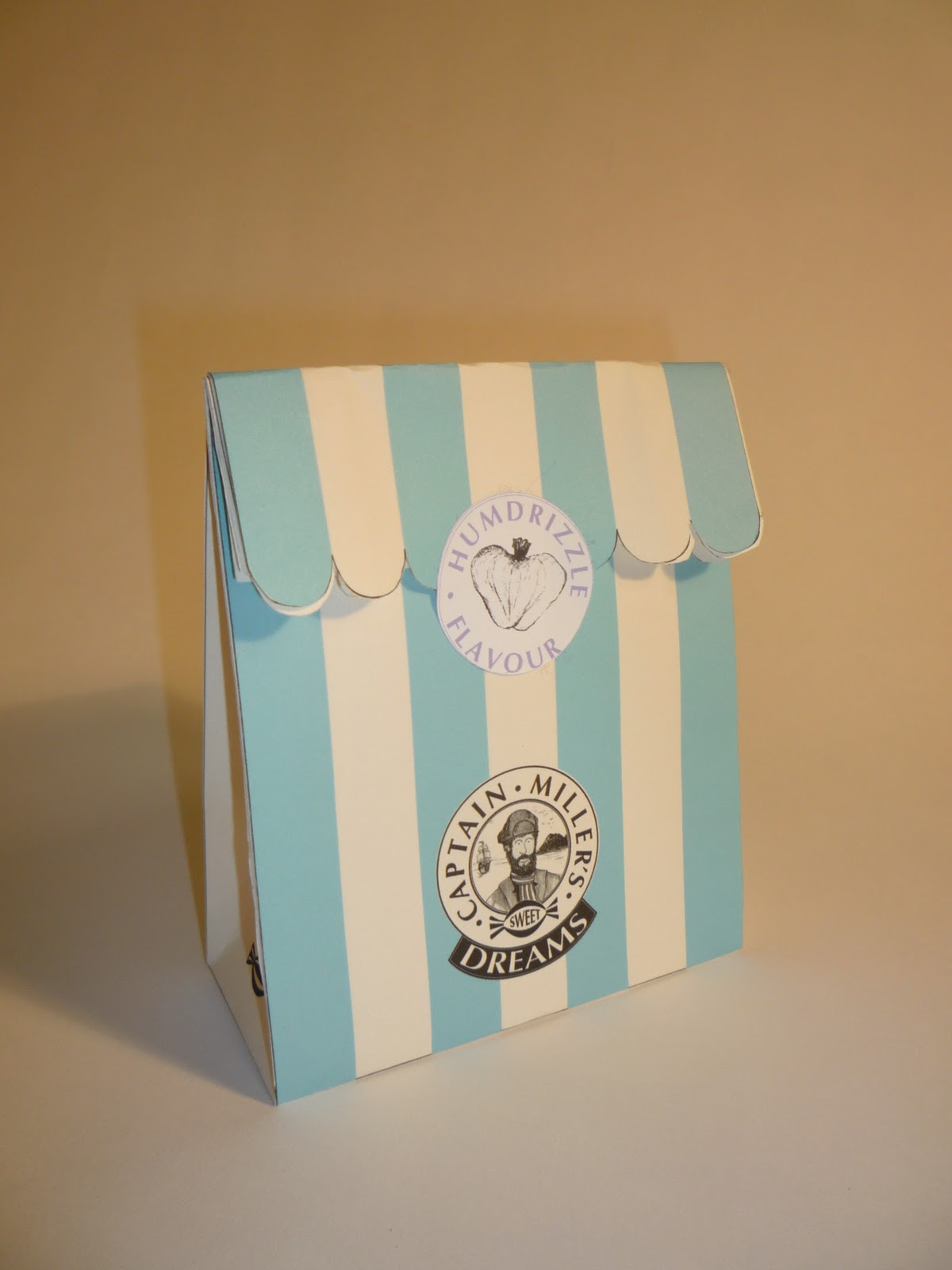
For this task I will be comparing my Captain Miller's sweet bags, according to there design. To a traditional english sweet shop.


My Work (Below).


Outside.


Inside.


I will be discussing the stereotypical design decisions I have made. In order for my design to communicate appropriately. 


Looking at my work there is a clear stereotype been made and its written all across the packaging and that is it screams out corner shop in a variety of reasons. I do admit that not all the design decisions were subconsciously the product is deliberately made to relate to that whole era, there was a certain amount of research invested to achieve this effect.
            The whole product communicates this stereotype by being very traditional throughout, this starts with the use of stock. The bag could have been made from any material more suited but paper is used, as it is with the classic penny sweet. Looking further into the stock I have subconsciously used a more cream and textured stock this, looks old and rustic in keeping with the era it emulates , it appears old and vintage terms people cant get enough of, terms associated with by gone times. The decision to use two colours and stripes is another stereotype and is seen mostly on vintage packaging most noticeably on sweet jars (stripes). Another association is candy canes two colours and stripes. The curve along the top of the bag is for me the biggest example it simply resembles the canopy hanging above the window. Another exterior feature of relevance is the branding of the shop a lot of old corner shops made associations with their owner or some sort of figure head similarly with sweet variety s and vintage products, a great example is uncle Joe's mint balls. Concentrating more on the branding the curvature in the typography is something that is readily used in vintage packaging and signs.


Old signage + type.


Traditional Branding.


Task 5- Sustainability vs Capitalism

Read the text- Balser, E (2008) 'Capital Accumulation, Sustainability & Hamilton Ontario'. We have copies in the CTS office, 115.

Write a 500 word critical summary of the text which explicitly addresses the following questions

  1. How is sustainability defined in the text?
  2. What are the main characteristics or tendencies of Capitalism
  3. Define a 'crisis of Capitalism'. Offer an example.
  4. What solutions have been offered to the sustainability question? Are these successful or realistic? - If not why are they flawed?
  5. Is the concept of sustainability compatible with Capitalism?


Sustainability is defined in two ways within the text as inter and intra- generational equality in the social environments, economic , moral and political spheres of society, persisting over generations. Ideologically sustainability is a communal concept, it requires everyone to contribute. Capitalism however interferes and hinders the progress of sustainability it uses sustainability as a commodity. Within capitalism is a constant need for money profit and expansion, the  market is always seeking the next big thing. Capitalism in a sense has always got its head up looking for the next commodity there is always a crisis and sustainable practices are the new commodity to fill their void.
      It gets complicated when these two ideologies attempt to run alongside one another, both are very different one goes forward for the good of all the other wants to do the same but make money along the way, it is this greed that acts as stumbling block. As much as capitalism shares the idea it also wants to make profit and this is central to its motivation, this however can mean potential harm to communities and the environment they share. 
      An example of the capitalist machine bulldozing over a community is the construction of the BIOX plant situated in the north east of Hamilton. It is a prime example of capitalism attempting to co exist with sustainability but forgetting the key driving force behind the process, the well being of people, the capitalist saw profit first.
       In theory this looks a good idea Bio diesel is a sustainable solution, easily recyclable and reduces waste production all fantastic for the environment. The problem arises when you take a small project and attempt to make it a profitable business. Saving the environment is all very well but then a plant has to be constructed, is that good for the environment and its inhabitants. It is environment that the capitalists are guilty of destroying. Hamilton is a fantastic example of such ignorance the plant was erected on the communities only green space, and very little thought was given to the health risks this imposed on the surrounding residents. For the capitalists this was of little concern, it was a cheap and easy solution there was no fuss or objection due to the poor authority involved. The effects foe locals were not only losing the their only green space, but constant tremors from the plant resulted in structural damage to surrounding buildings including many homes. This was also coupled with noise, light and air pollution. The plant was also guilty of massive breaches in safety regulations such as the release of flammable chemicals as well as sulphuric acid. All of which seriously effected the health of residents. 
            All of this is down to pure capitalist greed all in the name of progress for a few lousy quid, they would argue that it was all for the greater good and that sacrifices must be made  but when this involves the well being of people for profit, this causes the two ideas to clash.
          The huge problem is for Bio diesel to become effective it must be widespread and assessable to customers to do this more plants have to be built resulting in further suffering for local communities. For me this is a prime example of sustainability not working alongside capitalism. There are elements of the two that that work in unison BIOX fuel ticks some sustainable boxes, the huge problem is that companies will always want to expand and make profit. With this in mind it makes it impossible for the two to thrive alongside on another.

Task 4- Communication theory.


Use Shannon & Weaver's model of the communication process to write a 300-400 word analysis of a work of Graphic Design. Comment on the ways in which the piece of Graphic Design attempts to communicate to a specific audience, using techniques of redundancy, entropy or noise.


The piece of work I am going to attempt to analyse is a promotion for the museum of science and industry created by Manchester studio Love Creative. 

The information source in this case is the designer as he or she are the ones that transmit the message, by making it visual for the public to see. This means the visuals, being the sign with type, imagery as well as the car, act as a transmitter making the designers idea visual.
             These make up the channel which is the area cornered off containing the car and signs, The position of this work in the middle of the street also work to give relevance and meaning, removing the work from this environment would make the message weaker or result in it being lost entirely. 
             The receiver is the way in which the image is viewed, the overall image can be seen to be very entropic. It is clear that the signs are giving some sort of warning by the use of colour this is a clear use of communication along with the large traffic cones. All of these objects draw the attention of the viewer. However it is very unclear as to the significance of this work from a distance, a passer by could miss interpret the message or not receive it at all. For instance the signs could be any any regular signs encountered on the walk way, also the car could be cornered off for any mundane reason. Poor communication of the message could be made even more difficult by the use of type size resulting in a lack of key information. Even if the viewer reads the main information ( beware of the dinosaurs ) the actual type that presents the event is so small and poorly positioned it could be easily missed due to how low it is in the higher achy. All the above could result in the message being lost, the white text however would be redundant only if there actually was dinosaurs roaming the streets. The destination of this message is the viewers these being the day to day passers by.
             There is a huge amount of noise within this work and the environment that surrounds it. Concentrating firstly within the work as mentioned previously, the key information including location and dates etc, is presented in small type, the legibility is effected by poor use of colour. More noise could be from the surrounding objects i,e other parked vehicles could obscure or distract the viewer from the  work. As well as this other more direct advertising work nearby drawing the viewers eye more easily. In my opinion the work itself is too subtle it makes the viewer work too hard as to its real meaning.


Saturday, 26 March 2011

Task 3, essay BOOKS

Below are some books I am using at the mo to write my essay. Just a start I aim
 to add to this list.


Portfolio Task 3, essay Ideas.

I am going to base my essay around the panopticon and surveillance and society. More specifically how the underlining Idea of the panopticon plays out within our society today within certain social spaces and mechanisms.


The main focus of my essay is CCTV and other modern forms of surveillance these include certain social network sites and electronic devise such as debit cards.


Friday, 25 March 2011

Task 2 - On popular Music.

According to Adorno popular music is standardised, Lowbrow, Unsophisticated and is of no benefit to the listener. In short Adorno really did not embrace popular music this snobbery is rooted from the emergence of social integration, resulting in him becoming envious of the fact that he was unable to interact with the genre. He claimed that popular music in its structure is completely standardised, as the listener  knows the framework of each record, therefor if details were removed from the song then it would not matter the individual would simply be able to fill the gaps.
         Therefor no thought or work is required to listen to popular music it is simply repetition one hit is  followed by a succession of others just like it, this highlights a lack of imagination which according to Adorno leads to a state of false consciousness.
            Adorno also claims that popular music creates a state of pseudo individualism, people begin to choose music based on the belief that it makes them an individual, when really all they are doing is conforming to what the music industry wants. He makes the point that why would anyone buy music unless they thought it was special in some way. Adorno goes as far as to say that popular music is a release from the drudgery of modern life, people come home tired and want to listen to something unchallenging. Another reason according to Adorno is to fill their emotional needs he refers to popular music as erotic.
                Popular music in a sense takes on foucaudian elements in that it creates adjustments in our behaviour a rhythmic obedience in the way we move to music and how this is perceived by others.
        The Music I have chosen is Eliza Doolitles most recent hit Skinny Jeans to me this has the exact framework that Adorno talks about. The fact it is so repetitive in its format and structure throughout to me, makes it the perfect example. It can be argued that this goes a step further by removing words from the chorus and just filling them with a beat. Perhaps this is what Adorno was on about when he said we just need fill the gaps.

Thursday, 13 January 2011

Task 1- Contemporary Panopticism ...

Task...


Choose an example of one aspect of contemporary culture that is, in your opinion, panoptic. Write an explanation of this, in approximately 200-300 words, employing key Foucauldian language, such as 'Docile Bodies' or 'self-regulation, and using not less than 5 quotes from the text 'Panopticism' in Thomas, J. (2000) 'Reading Images', NY, Palgrave McMillan.


Panopticism is a theory developed by the philosopher Michael Foucault which focuses on the the relationship between body power and knowledge. Panoptissum is a lot to do withe environment and the situation the suspect or suspects are put in. An example of panoptissum within our modern society is the use of speed cameras on our roads, mechanisms that we are told are their to protect us at the same time massively effect our behaviour on the  causing us to self regulate and become perfect docile drivers.  As we approach the camera we are constantly informed of its presence by a succession of signs, positioned to remind us we are being monitored. These initial signs as well as the speed camera itself are all part of a disciplinary project (Foucault in Thomas, J, 2000:62)just like the plague that Foucault discussed this is no different we are reminded and warned to slow down through the fear of the consequences. As soon as we enter the gaze of the camera we self discipline lowering our speed, to the driver visibility become a trap (Foucault in Thomas, J, 2000:64) this continues till the car leaves its white lines. This process from entering to leaving the cameras gaze is the transition between the normal and the abnormal (Foucault in Thomas, J, 2000:66) the fact the suspect might speed causes them to feel abnormal this feeling of abnormal disciplines the driver to become normal by keeping their speed down. This change in our behaviour occurs because we become aware that we are being watched. By reducing our speed we become the perfect docile bodies obedient and easily controlled by the authority of the camera (Foucault in Thomas, J, 2000:61).
In conclusion the panoptic gaze of the camera achieves a perpetual victory (Foucault in Thomas, J, 2000:66) as  no physical confrontation is required by an authoritative figure, simply;y because of of a camera with a florescent backboard.